 Decluttering
 Room Organisation
 Storage Solutions
 Small Spaces
 Cleaning & Home Routines
 Product Guides
Do House Clearance Companies Take Everything?
The items most clearance firms take, the ones they refuse or charge extra for, and what to do with each.
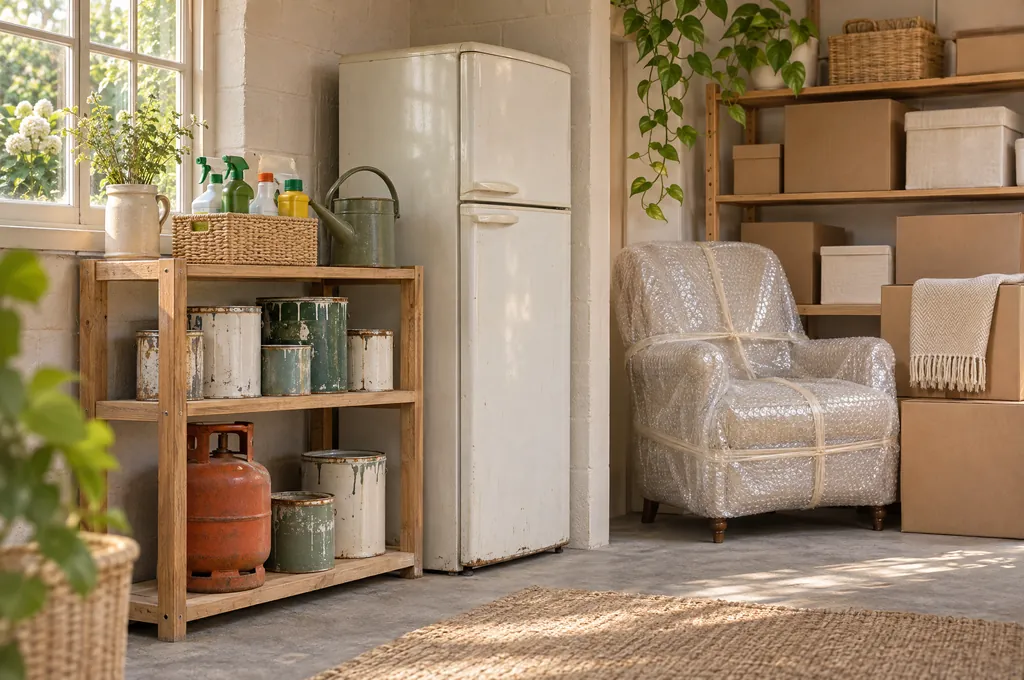
Quick answer: No. Most clearance companies will take furniture, electricals, clothes, books, kitchenware and general household waste, but many refuse or charge extra for hazardous items such as asbestos, paint, chemicals, gas bottles, plasterboard and tyres. Fridges, freezers, mattresses and sofas are usually taken but cost more because of how they must be disposed of.
In this article
When you book a house clearance, it is natural to assume everything will go. In practice, there are a handful of items that most clearance firms either cannot take or can only take at an extra cost, because the law says they must be handled in a particular way. Knowing what these are before the day saves surprises, delays and arguments over the bill.
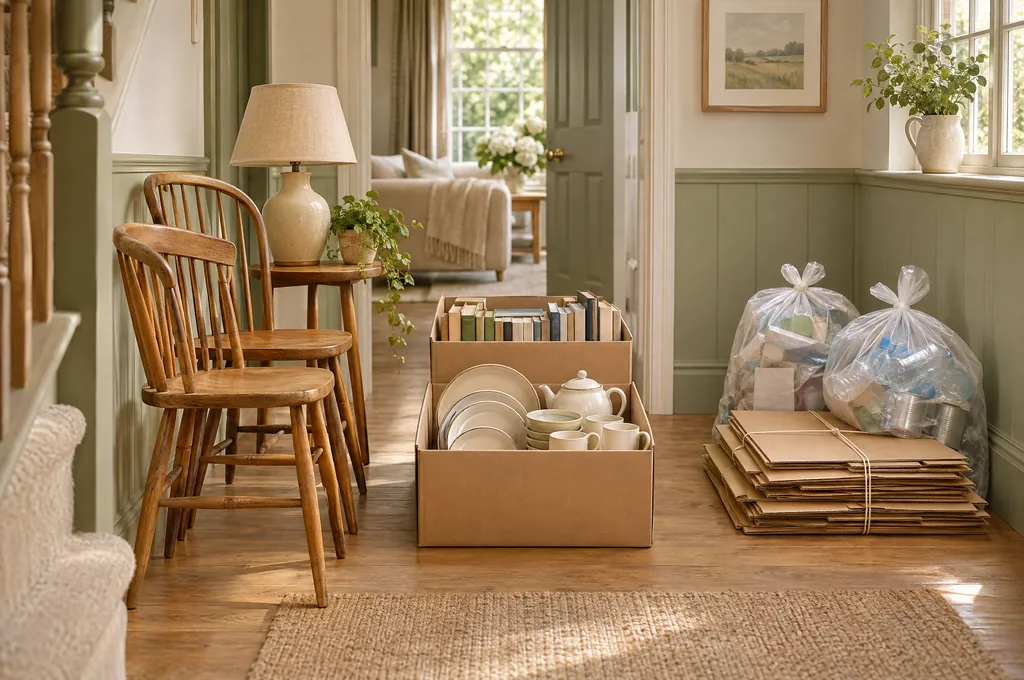
What clearance companies will usually take
- Furniture of all kinds, including beds, wardrobes, tables and chairs
- Clothes, shoes, bedding, curtains and other textiles
- Books, papers, ornaments, china and glassware
- Kitchenware, pots, pans and small appliances
- Televisions, computers and other electrical items
- Garden furniture, tools and bikes
- Carpets and rugs
- General household rubbish
Items usually taken, but at an extra cost
These items need specialist recycling or disposal, so most firms add a charge for each one. National cost guides give a rough idea of what to expect:
| Item | Why it costs more | Typical extra charge |
|---|---|---|
| Fridges and freezers | Refrigerant gases must be removed safely | Around £75 small, £120 large |
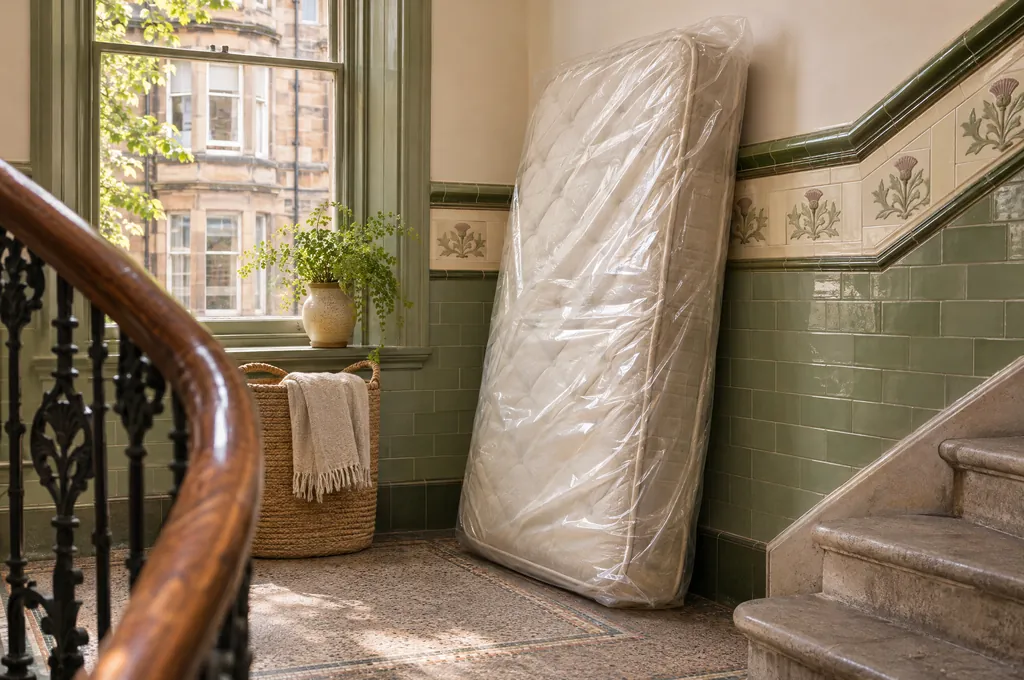
| Mattresses | Bulky, and recycling is specialist | Around £25 each |
| Televisions and monitors | Electrical waste rules | Around £20 each |
| Sofas and armchairs | Banned from landfill in Scotland since 2024 if they may contain persistent organic pollutants | Varies by firm |
| Pianos and very heavy items | Extra labour and lifting equipment | Varies by firm |
| Rubble and soil | Charged by weight | Around £149 per tonne from one Glasgow firm |
Items most clearance companies will not take
These are often refused because the firm is not licensed to carry them, or because they need a specialist contractor:
- Asbestos. This must be handled by a licensed asbestos contractor. If you suspect old floor tiles, boards or a storage heater contain asbestos, do not disturb them.
- Paint, solvents and garden chemicals. Many firms will not take part-used tins and bottles.
- Gas bottles and cylinders. Often refused because of the explosion risk.
- Car batteries, engine oil and fuel.
- Plasterboard. It cannot be mixed with general waste.
- Tyres.
- Medicines and sharps.
- Clinical waste.
- Fire extinguishers.
Policies vary, so always ask each firm for its list. Some larger clearance companies hold the right licences for some of these items and will quote for them.
What to do with the items they will not take
Take them to a recycling centre
Glasgow residents can take household hazardous waste, including paint, garden chemicals, solvents and aerosols, to the household waste recycling centres at Dawsholm, Polmadie and Shieldhall, and gas bottles to the same three sites. Car batteries and engine oil are also accepted at some sites. Opening hours are 8am to 6pm, seven days a week, and the sites are for Glasgow City Council residents only. Check the council website for which site takes what, as the new Easter Queenslie centre is adding materials in phases.
Return medicines to a pharmacy
Unused or out-of-date medicines should go back to a pharmacy for safe disposal, never in the bin or down the sink.
Use a specialist for asbestos
Glasgow City Council will not collect asbestos at the kerbside. Small amounts from households can be taken to Shieldhall by advance booking only, and anything larger needs a licensed contractor.
Book a bulky uplift for some items
The council's bulky uplift will collect most furniture, electricals and white goods for a charge, but not asbestos, plasterboard or fire extinguishers. Our guide to getting rid of a mattress in Glasgow explains the current charges.
Romaine's tip: Gather everything hazardous into one box or one corner of the garage before you ask for quotes. It makes it easy to show the firm exactly what is there, and easy to take the rest to the recycling centre yourself in one trip.
What about very cluttered homes?
A home where belongings have built up over many years can still be cleared, but it needs more care. There may be hidden hazards such as old medicines, damp or vermin, and there are often important papers mixed in with everything else. Tell the clearance company honestly what to expect so it can send the right team and allow enough time. For timings, see how long a house clearance takes.
Clearances with The Clutter Clinic
When we quote for a house clearance in Glasgow or Paisley, we tell you up front which items need special handling and what, if anything, they add to the cost. To find out where everything ends up, read what happens to your belongings during a clearance.
Frequently asked questions
Will a house clearance company take paint?
Many will not. Glasgow residents can take part-used paint to the household waste recycling centres free of charge. Nearly full tins can sometimes be donated to community paint reuse schemes.
Do clearance companies take fridges?
Most do, but usually at an extra cost, because the gases inside must be removed by a specialist recycler.
Will a clearance company take a sofa without a fire label?
Usually yes, but it cannot be resold or donated, and in Scotland it must be kept out of landfill, so expect to pay more for it.
Can clearance companies remove asbestos?
Only if they are licensed for it. Most are not, and you will need a specialist asbestos contractor.