 Decluttering
 Room Organisation
 Storage Solutions
 Small Spaces
 Cleaning & Home Routines
 Product Guides
What Happens to Your Belongings During a House Clearance?
Where furniture, clothes, electricals and rubbish go after a clearance, and how to check a company handles them properly.
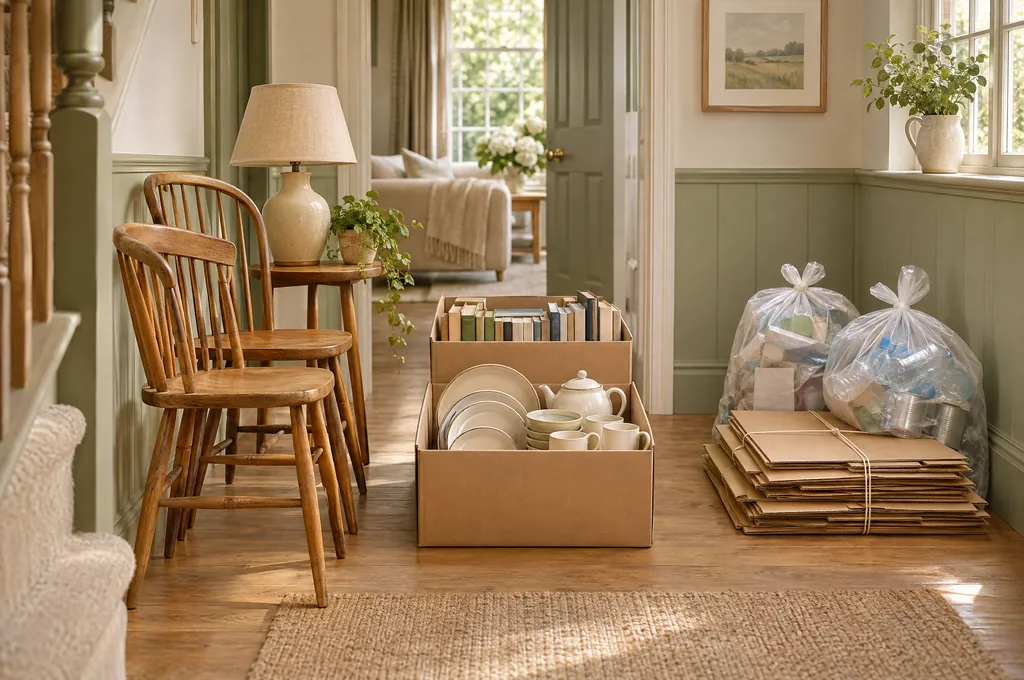
Quick answer: A responsible clearance company sorts your belongings into four streams: items that can be sold or reused, items donated to charity, materials that can be recycled and a final share that goes for licensed disposal. In Scotland, the firm must be registered with SEPA to carry waste, and as the householder you have a legal duty to check that it is.
In this article
Once the van drives away, most people never think about their belongings again. But where those things end up matters, both for the environment and for you. If a clearance firm dumps your household waste at the side of a road, the trail can lead straight back to your address. This guide explains what happens to each type of item during a house clearance and how to make sure it is handled properly.
Step one: sorting on the day
A good clearance team does not simply throw everything into the van. They work room by room, usually in this order:
- Anything you have marked to keep is left alone. It helps to put it in one room or label it clearly before the team arrives.
- Personal items are set aside. Photographs, papers, bank cards and anything that looks personal should be handed back to you, not cleared.
- Saleable and reusable items are loaded carefully so they are not damaged.
- Everything else is separated by material, such as electricals, textiles, metal, wood and general waste, so each can go to the right place.
Where each type of item goes
| Item | Where it usually ends up |
|---|---|
| Good furniture | Resold through the firm's shop, auctions or dealers, or donated to furniture reuse charities |
| Clothes, shoes and bedding | Charity shops if wearable, textile recycling if not |
| Books, china and bric-a-brac | Charity shops, dealers or recycling |
| Fridges and freezers | Specialist recycling, because the gases inside must be removed safely |
| Other electricals | Tested and resold if working, otherwise recycled as electrical waste |
| Metal | Scrap metal recycling |
| Sofas and armchairs | Reuse if they have fire labels and are in good condition, otherwise separated and incinerated, as they can no longer go to landfill in Scotland |
| Mattresses | Mattress recycling where available, otherwise licensed disposal |
| Paper and cardboard | Recycling, unless it contains personal information that needs shredding |
| General waste | A licensed waste facility |
Charities are often more selective than people expect. Most will not accept upholstered furniture without an intact fire label, and they need goods in clean, saleable condition. Our guide to Glasgow charities that collect furniture explains what each one accepts.
The rules in Scotland
Your duty of care
Everyone who produces waste in Scotland, including householders, has a duty of care. The Scottish Government's guidance is clear: household waste that the council does not collect must be passed to a waste transporter registered with SEPA, the Scottish Environment Protection Agency. You can check a firm on SEPA's public register of waste transporters before you book.
Fly-tipping
Fly-tipping is a criminal offence. The fixed penalty in Scotland is £500, and serious cases can lead to prosecution, fines of up to £40,000 or imprisonment. Around 26,000 tonnes of waste are fly-tipped in Scotland every year, and some of it comes from unregistered operators who offered a householder a cheap clearance.
Upholstered seating
Since 1 February 2024, waste sofas, armchairs and other upholstered domestic seating that may contain persistent organic pollutants have been banned from landfill in Scotland. They have to be kept separate and destroyed, usually by incineration. That is why many firms now charge more for sofas, and why Glasgow City Council collects them separately from other bulky items.
Questions to ask a clearance company
- Are you registered with SEPA to carry waste, and what is your registration number?
- Which charities or reuse organisations do you work with?
- How do you handle fridges, electricals and sofas?
- Roughly how much of what you collect is reused or recycled?
- Will you return any personal papers or photographs you find?
- Can you give me a written quote and a waste transfer note?
A reputable firm will answer these without hesitation. If a company is vague, cannot give you a registration number or only accepts cash with no paperwork, look elsewhere.
Romaine's tip: Ask to be told about anything personal the team finds, even if it looks unimportant. Letters, photographs and old diaries often turn up in the most unlikely places, such as inside books or behind drawers.
How we handle your belongings
At The Clutter Clinic, we sort every clearance in Glasgow and Paisley so that as much as possible is reused, donated or recycled, and we set aside anything personal for you. If you want to know more about why reuse and recycling matter, read The Environmental and Economic Impact of Recycling. You might also find it useful to know which items clearance firms will not take.
Frequently asked questions
Do house clearance companies sell your things?
Yes, many resell good items through their own shops, auctions or dealers. This is often how they keep their prices down, and it means more of your belongings are reused.
Can I be fined if a clearance company fly-tips my waste?
You could be held responsible if you did not take reasonable steps to check the company was registered. Always check SEPA's register and keep your paperwork.
Do clearance companies donate to charity?
Most reputable firms donate items they cannot sell but that are still usable. Ask which charities they work with.
What happens to photographs and personal papers?
A responsible firm will set them aside and return them. Papers that are cleared should be shredded rather than recycled whole, to protect against identity fraud.