 Decluttering
 Room Organisation
 Storage Solutions
 Small Spaces
 Cleaning & Home Routines
 Product Guides
How Do You Get Rid of an Old Sofa in Glasgow?
The council uplift, recycling centres, charity collections and the rules that now apply to sofas and armchairs in Scotland.
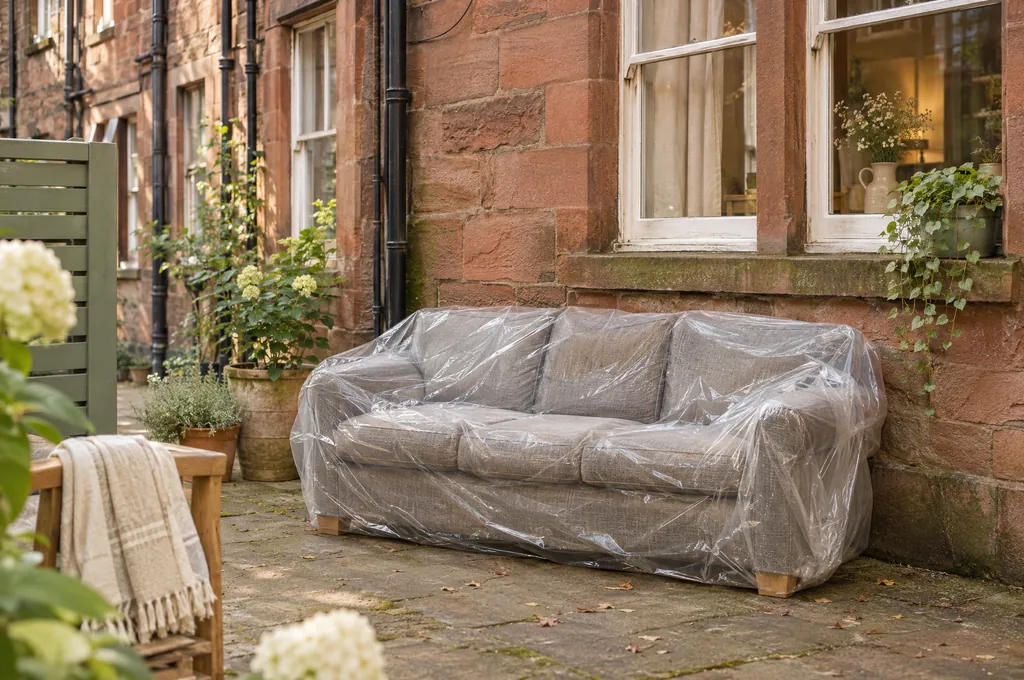
Quick answer: The cheapest way for most people is Glasgow City Council's bulky uplift, which collects a sofa or armchair for £5 per item in 2026. You can also take it free of charge to any of the city's four recycling centres, donate it to a charity that collects if it still has its fire safety label, or include it in a house clearance. Sofas are now handled separately from other bulky waste in Scotland, because upholstered seating that may contain persistent organic pollutants can no longer go to landfill.
In this article
Sofas are one of the most awkward things to get rid of. They are heavy, they rarely fit in a car, and in a tenement flat they have to come down a stone stair. The rules have also changed in recent years, so advice that was right a few years ago may no longer apply. This guide covers every way to dispose of an old sofa in Glasgow, what each option costs and how to choose.
Why sofas are treated differently in Scotland
Many older sofas and armchairs were treated with flame retardant chemicals that are now classed as persistent organic pollutants, or POPs. These break down very slowly and build up in the environment. Since 1 February 2024, waste upholstered domestic seating that may contain POPs has been banned from landfill in Scotland and must be destroyed, usually by incineration. That covers sofas, sofa beds, armchairs, futons, footstools with padding and upholstered office chairs.
In practice this means sofas are collected and handled separately from other bulky waste. It is also why some clearance firms now charge more for them than they used to.
Option 1: Glasgow City Council bulky uplift
Since 1 April 2026, the council has a separate bulky uplift category for upholstered seating. The charge is £5 per item, the same as other standard bulky items, but sofas and armchairs are collected entirely separately from your other bulky waste to meet SEPA guidance. If you book a sofa and a wardrobe, expect two different collections.
- How to book: online through the council's bulky waste service, paying by card. You will receive a reference and then a collection date.
- Where to put it: in your back court or garden the day before collection, not in the close or on the street, unless you have no outside space.
- Keep it dry: the council may refuse to collect sofas that have become waterlogged, so cover it if rain is forecast.
- Who cannot use it: high-rise properties and buildings with internal bulk chambers, which should use their bulk room and contact their housing association or factor.
Our guide to getting rid of a mattress in Glasgow explains the bulky uplift in more detail, including the 2026 festive pause.
Option 2: take it to a recycling centre
All four of Glasgow's household waste recycling centres, at Dawsholm, Polmadie, Shieldhall and Easter Queenslie, accept upholstered seating free of charge. Look for the dedicated upholstered seating container on site and ask staff if you are not sure where it goes. The sites are open from 8am to 6pm every day and are for Glasgow City Council residents only.
A sofa will not fit in most cars, and vans are only allowed at Dawsholm and Shieldhall at set times. Read can you take a van to a Glasgow recycling centre before you hire one.
Option 3: donate it
If your sofa is clean, undamaged and still has its original fire safety label, a charity may collect it for free. Several Glasgow charities offer free furniture collections, including Emmaus Glasgow, the British Heart Foundation, Shelter Scotland and the Prince & Princess of Wales Hospice. Our guide to charities that collect furniture in Glasgow covers what each accepts.
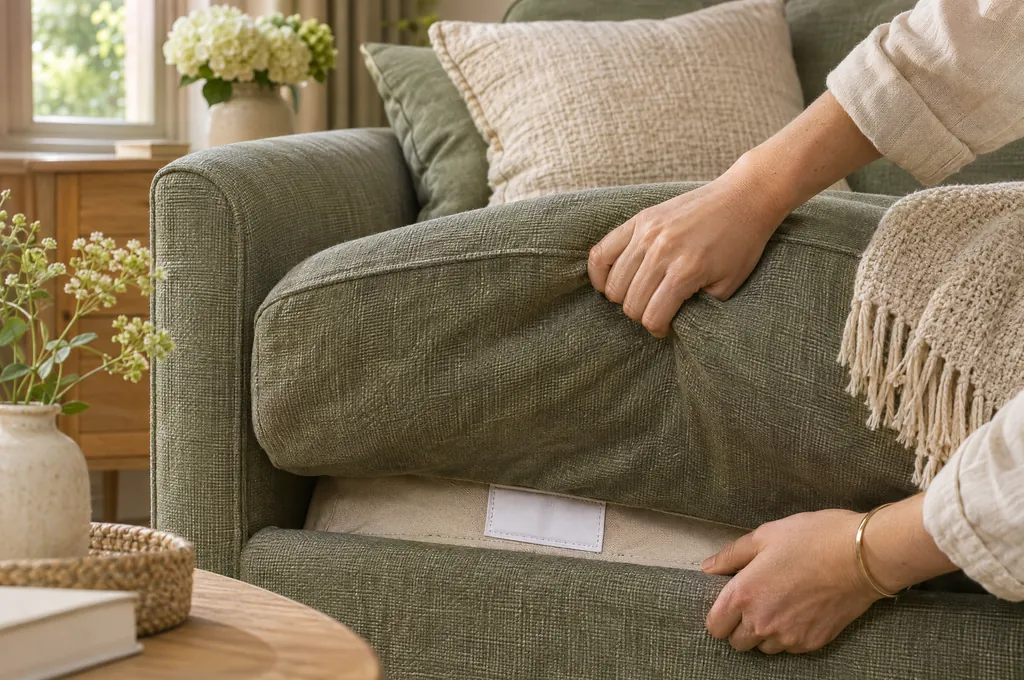
Check the fire label first
UK fire safety rules mean charities cannot sell upholstered furniture without its original fire safety label. Look under the seat cushions and along the base or back of the sofa. If the label has been cut off, a charity will almost certainly turn it down, however good it looks. Zero Waste Scotland's national re-use tool, which the council links to, also only lists sofas that still have their fire labels.
Option 4: sell it or give it away
Good-quality sofas, especially recent ones from well-known brands, can sell on local marketplaces. Price realistically, be honest about any wear, and make clear that the buyer must collect and how many flights of stairs there are. Free listings and community groups can also find a new home for a sofa quickly, as long as it is in reasonable condition.
Option 5: a clearance or rubbish removal firm
If the sofa is part of a bigger clear-out, a clearance team can carry it down and take it away with everything else. Expect to pay more for sofas than for other furniture, because they must be kept out of landfill. Always check that the firm is registered with SEPA to carry waste. Our Glasgow house clearance price guide explains typical costs, and our guide to what clearance companies will take covers other awkward items.
Romaine's tip: Measure the sofa and every doorway and turn on the stair before you start. Many sofas came into a flat with the feet removed or on their end, and they have to leave the same way. Unscrewing the legs first can save a lot of scraped walls.
What not to do
Never leave a sofa in the street, a back lane or beside the bins without a booked collection. Glasgow City Council treats items left on the street or in a back lane as fly-tipping, and the fixed penalty for fly-tipping in Scotland is £500. Do not cut up or burn an old sofa either, because of the chemicals it may contain.
Frequently asked questions
How much does Glasgow council charge to collect a sofa?
£5 per item in 2026. Sofas and armchairs are collected separately from other bulky items.
Can I take a sofa to a Glasgow recycling centre?
Yes. All four recycling centres accept upholstered seating free of charge in a dedicated container.
Will a charity take a sofa without a fire label?
Almost never. Charities cannot legally resell upholstered furniture without its original fire safety label.
Why can sofas not go to landfill in Scotland?
Many contain flame retardant chemicals classed as persistent organic pollutants. Since February 2024 they must be destroyed rather than buried.