 Decluttering
 Room Organisation
 Storage Solutions
 Small Spaces
 Cleaning & Home Routines
 Product Guides
What Should You Do With Your Grandparents' Old China?
How to tell if it has value, where to sell or donate it in the UK, and how to keep a few pieces in everyday use.
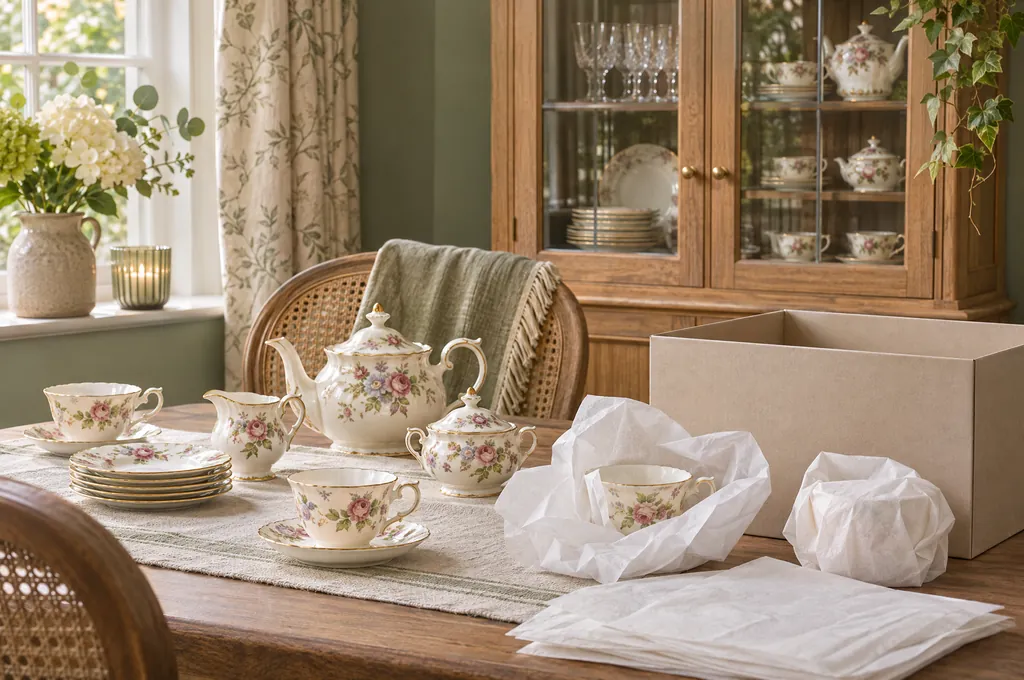
Quick answer: Turn a piece over and look for the backstamp, which tells you the maker and often the pattern. Most bone china tea sets and dinner services were mass-produced and sell for little today, although rare patterns, early pieces and famous makers can still have value. Sell individual pieces to replacement services or at auction, donate the rest to a charity shop, and keep a few favourite pieces to use rather than store.
In this article
Almost every family has a set of good china: the floral tea set that came out at Christmas, the dinner service that was a wedding present, the cabinet full of cups and saucers nobody was allowed to touch. When a grandparent dies or downsizes, that china often passes to someone who has neither the space nor the use for it. This guide explains how to find out if it is worth anything and what to do with it.
How to identify your china
The underside of each piece usually carries a backstamp, the maker's mark. It may show:
- The maker, such as Royal Albert, Royal Doulton, Wedgwood, Aynsley, Royal Worcester or Spode
- The pattern name, such as Old Country Roses
- Words such as "bone china" or "fine bone china"
- Sometimes a registration number or a date code that helps date the piece
Write down the maker and pattern for each set, and count the pieces. Note any chips, cracks, crazing or worn gilding, as condition makes a big difference to value.
Is old china worth anything?
The honest answer for most families is: not much. Bone china was made in enormous quantities in the twentieth century. Royal Albert's Old Country Roses alone is said to have sold more than 150 million pieces, according to the specialist auction house Potteries Auctions. With so much in circulation and fewer people using formal tea sets, prices for common patterns are low.
There are exceptions. China is more likely to have value if it is:
- Older, particularly nineteenth century or earlier
- Hand-painted or signed by a known artist
- From a rare, short-lived or discontinued pattern that collectors want
- Made by an important maker in a desirable period
- Complete and in excellent condition
If you think you may have something special, ask an auction house for a valuation. Many offer free valuations from photographs.
Where to sell old china in the UK
China replacement services
Specialist companies such as Chinasearch buy and sell discontinued tableware for people who want to replace broken pieces or complete a set. You choose the maker and pattern on their website and list the pieces you have. They will tell you if they are interested and what they will pay. This works well for popular patterns where individual pieces are in demand.
Auction houses
For older, rarer or more valuable china, a local or specialist ceramics auction house is the best route. In Glasgow, general auction houses such as Great Western Auctions and McTear's sell ceramics, and specialist salerooms in Stoke-on-Trent focus on British pottery.
Online marketplaces
Selling online can work for complete sets or popular patterns, but china is fragile and costly to post, so collection-only sales are often easier.
Collectors' groups
Online groups devoted to particular makers or patterns can be a good way to find buyers who want exactly what you have.
Donating old china
Most charity shops welcome china, cups, saucers and plates in good condition. Wrap each piece in newspaper or bubble wrap, pack them tightly in a sturdy box and mark it fragile. Some charities, such as Emmaus Glasgow, specifically list china and glassware among the donations they accept. Community cafés, churches, theatre groups and vintage tea party hire businesses are also worth asking.
Keeping some, and using it
You do not have to keep the whole service to keep the memory. Some ideas:
- Keep one cup, saucer and plate as a trio for your morning coffee.
- Use the teapot, milk jug or sugar bowl as a vase or for flowers.
- Give a cup and saucer to each grandchild or cousin as a keepsake.
- Use mismatched pieces for a relaxed vintage table at celebrations.
- Mount a favourite plate on the wall.
Most important of all, use it. China that is used every day brings back memories every day, while china in a box in the loft does nothing at all. Many old pieces are not dishwasher safe, especially those with gold or silver edges, so wash them by hand.
Romaine's tip: Lay the whole set out on a table and photograph it before you decide what to do. Seeing it all at once makes it much easier to choose the few pieces you love and let the rest go.
What to do with chipped or broken china
Chipped and broken china cannot go in your glass recycling, because ceramics melt at a different temperature and contaminate the glass. Wrap it in newspaper and put it in general waste, or take it to a household waste recycling centre. Pieces with interesting patterns can be used for mosaics or garden projects.
More help with inherited belongings
China usually comes with other inherited items. Our guides to inherited furniture you do not want and old letters and cards may help, and our decluttering section has more on letting go of sentimental things.
Frequently asked questions
Is Royal Albert china worth anything?
Common patterns such as Old Country Roses were made in huge numbers and usually sell for modest sums. Rare patterns and early pieces can be worth more.
How do I find out what my china is worth?
Check the backstamp for the maker and pattern, look at sold prices for the same pattern online, and ask an auction house for a free valuation if you think it may be valuable.
Will charity shops take old china?
Most will, as long as it is clean and undamaged. Pack it carefully and mark the box fragile.
Can broken china be recycled?
Not with glass. Put it in general waste or take it to a household waste recycling centre.