 Decluttering
 Room Organisation
 Storage Solutions
 Small Spaces
 Cleaning & Home Routines
 Product Guides
What Should You Do With Old Cine Film and Slides?
How to find out what is on them, why you should not use an old projector, what digitising costs and what to do afterwards.
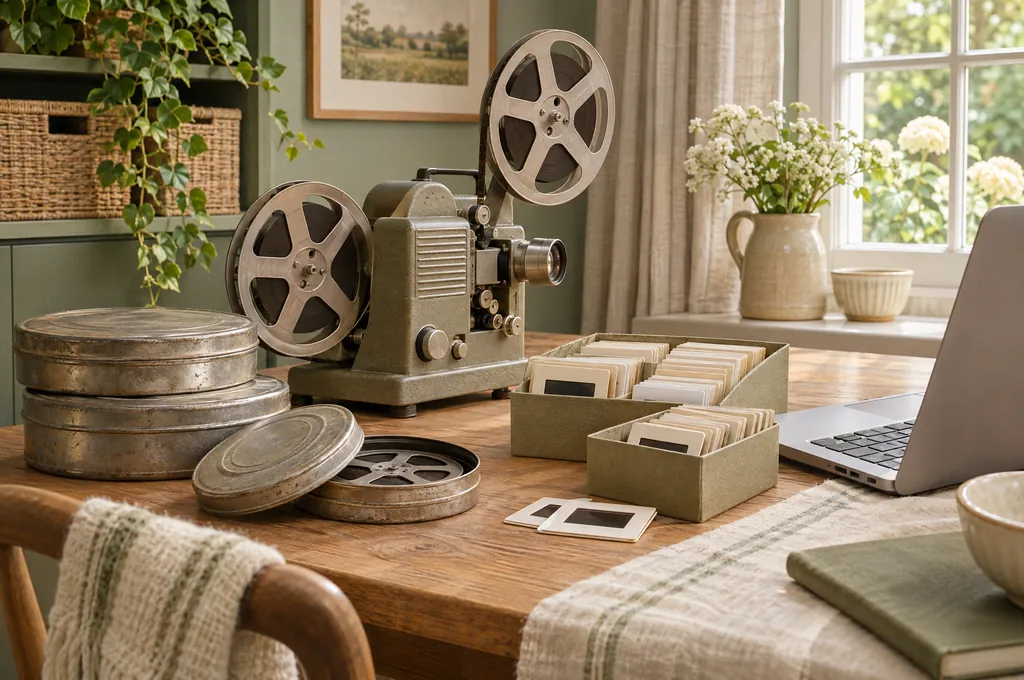
Quick answer: Do not run old cine film through an old projector to see what is on it. Check reels by hand, look for any that smell of vinegar, and send the ones that matter to a specialist to be digitised: UK prices start from under £10 for a short reel and rise with length. Slides can be viewed on a lightbox and scanned at home or by a service. Once digitised, keep a few precious originals, store them cool and dry, and let the rest go.
In this article
Many families have a box of cine film reels or slide carousels in the loft: holidays, weddings, christenings and grandparents filmed decades ago. Few people still have a working projector, and the films and slides are slowly deteriorating. This guide explains how to find out what you have, what digitising costs, and what to do with the originals.
What kind of film do you have?
Most home movies are on one of three formats:
- Standard 8mm, common from the 1930s to the 1960s, usually filmed at 16 frames per second.
- Super 8, introduced in the 1960s, with a larger picture and usually filmed at 18 frames per second.
- 16mm, used by some keen amateurs and for professional films.
The size of the reel tells you roughly how long the film runs. According to one UK specialist lab, a 3-inch reel holds about 50 feet of film, which runs for around three to four minutes. A 5-inch reel holds about 200 feet, roughly 13 to 17 minutes, and a 7-inch reel about 400 feet, roughly 27 to 33 minutes.
Why you should not use an old projector
It is tempting to dig out the old projector to see what is on each reel, but old film can be brittle, and a worn or unserviced projector can scratch, tear or burn it. Specialist labs advise against it. You can check a reel by unwinding a short length by hand and holding it up to the light, which will show you the format and whether there are people or places on it.
Watch out for vinegar syndrome
Older acetate film can break down in a process called vinegar syndrome. The US National Archives advises that if a film smells of vinegar, it is in trouble and should be assessed by a professional. Film affected this way can shrink, warp and become brittle, and it can spread the problem to other reels stored nearby. Keep affected reels separate and get them digitised as soon as possible.
How to digitise cine film
Cine film needs specialist equipment to digitise well, so most people use a professional service. Services clean each reel and transfer it to a digital file you can watch on a television, computer or phone. Prices vary between companies. Published UK prices in late 2026 include:
- From around £7.50 to £20 for a short 50-foot reel, depending on the company and quality
- Around £40 for a 200-foot reel and £60 for a 400-foot reel at one specialist lab
- Budget options from around £10 for a short reel, with higher-resolution scanning costing more
Always check whether the price includes cleaning, the resolution, how files are delivered, and how your originals are protected in the post and in the lab.
What to do with 35mm slides
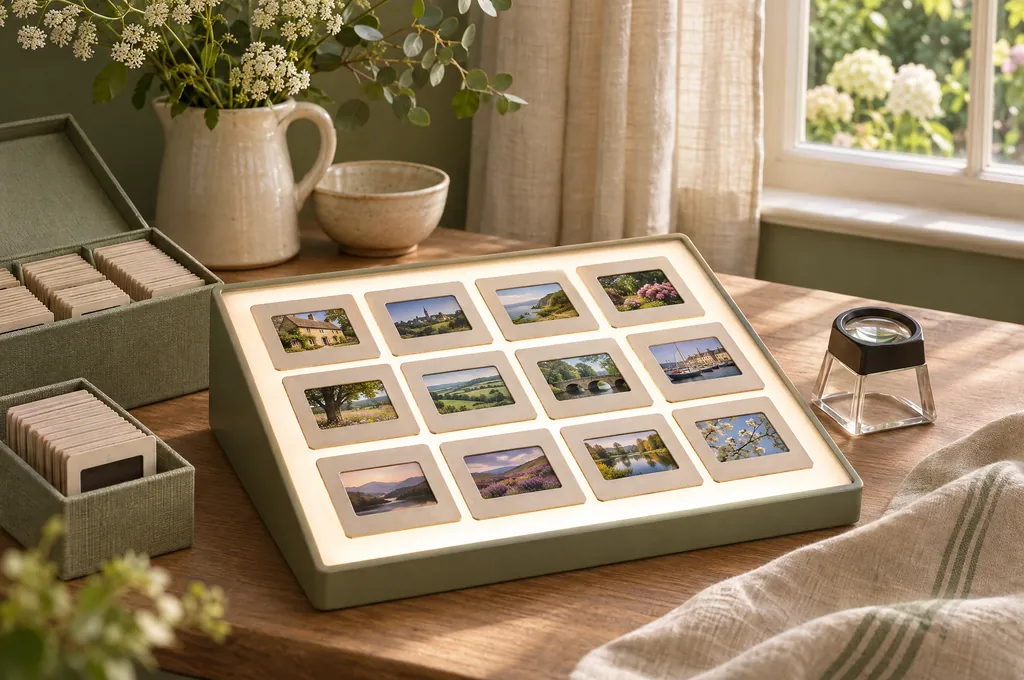
Slides are easier to deal with at home. A lightbox and a small magnifying loupe let you look through them without a projector. Sort out the ones worth keeping, then:
- scan them yourself with a dedicated slide scanner or a flatbed scanner with a slide holder,
- photograph them on a lightbox with a good phone camera, or
- send them to a scanning service, which is quicker for large collections.
Most slide collections include plenty of near-identical shots and blurry landscapes, so be selective. Our guide to old photo albums has more on deciding what to keep.
After digitising
- Back up the files in at least two places, such as an external hard drive and cloud storage.
- Name files clearly with the year, place and people, for example 1972-arran-holiday.
- Share them with family, who may be able to name people and places.
- Keep a few precious originals if you wish, stored in their cans or boxes somewhere cool, dry and dark, not in a damp loft or garage.
- Let the rest go. Once you have good digital copies, most originals can be disposed of. Film and slides usually go in general waste, and old projectors can go to electrical recycling.
Romaine's tip: Ask an older relative to watch the digitised films with you and record them talking about who and where everyone is. That commentary can become as precious as the films themselves.
Related guides
Cine film often sits alongside other formats. See what to do with old VHS tapes, old photo albums and old letters and cards.
Frequently asked questions
How much does it cost to digitise cine film in the UK?
Prices start from under £10 for a short reel with some companies and rise with the length of film and quality, to around £60 for a long reel at specialist labs.
Can I watch old cine film without a projector?
You can check a short length by hand against the light. To watch it properly, have it digitised by a specialist.
What is vinegar syndrome?
A breakdown of older acetate film that gives off a vinegar smell. Affected film should be assessed by a professional and digitised quickly.
How do I store old slides?
In their boxes or archival sleeves, somewhere cool, dry and dark inside the house.