 Decluttering
 Room Organisation
 Storage Solutions
 Small Spaces
 Cleaning & Home Routines
 Product Guides
How Do You Declutter a Loft?
How to clear a loft safely, what belongs up there and what does not, and how to keep it organised afterwards.
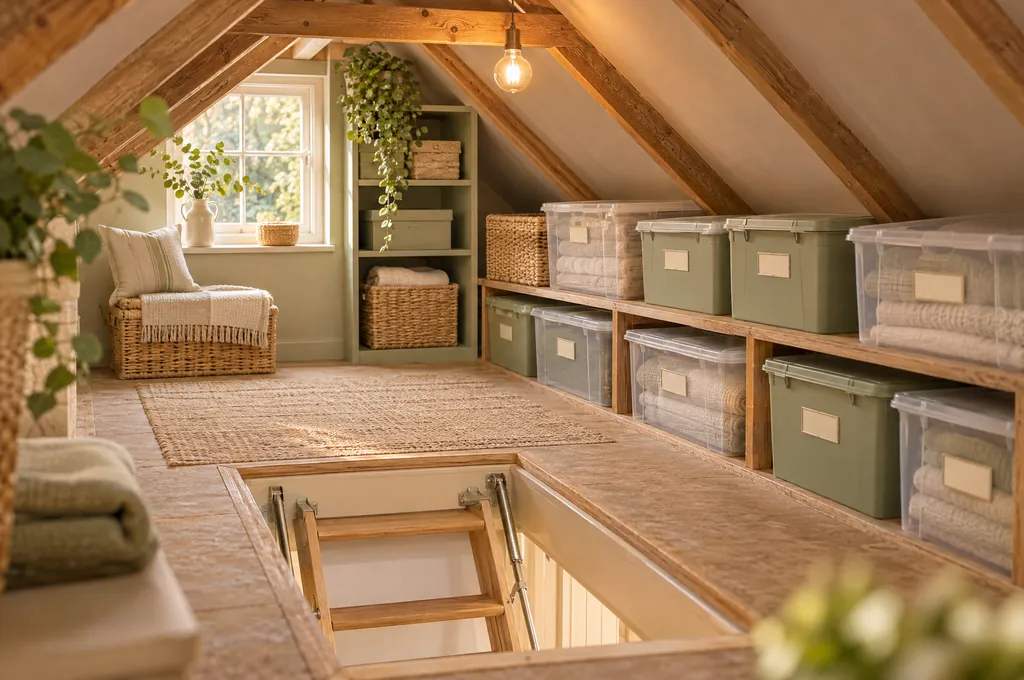
Quick answer: Plan for a full day or a weekend, with a helper, good lighting, gloves and a steady ladder. Bring everything down in stages and sort it in a room with space, rather than in the loft itself. Keep only seasonal items, travel gear and properly packed keepsakes up there, and avoid storing anything that damp, heat or cold could damage. Only walk and store on boarded areas, and do not squash the insulation.
In this article
The loft is where things go to be forgotten. Boxes from the last house move, children's toys, old paperwork, broken appliances and suitcases full of who knows what. Because it is out of sight, a loft can fill up for decades before anyone notices. Clearing it is very satisfying, but it needs a little planning to do safely. This guide explains how to declutter a loft step by step.
Safety first
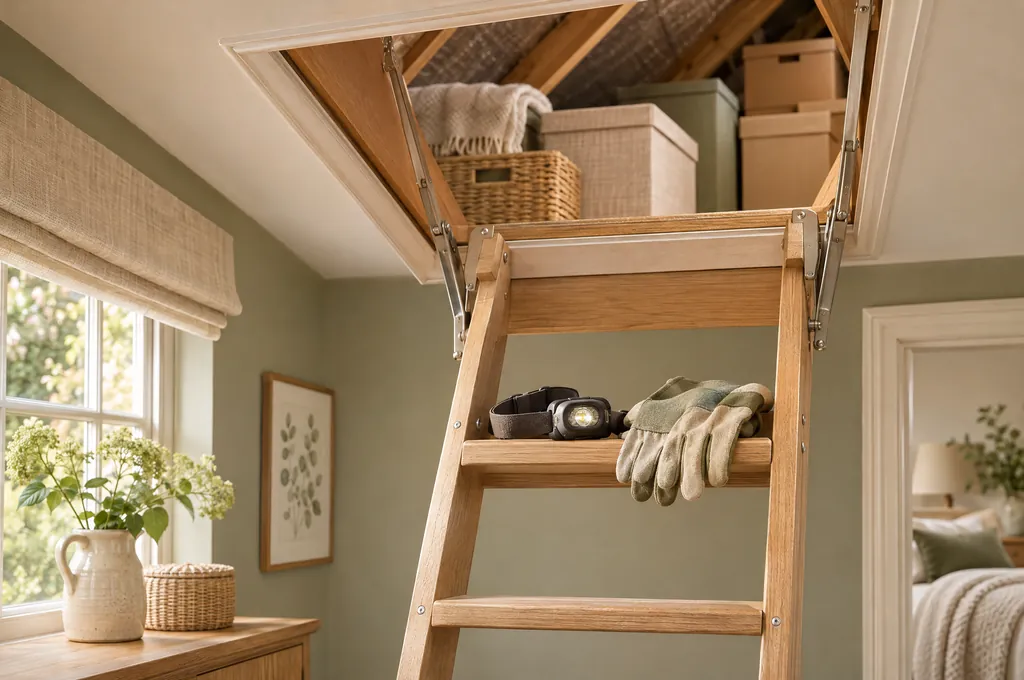
- Use a steady loft ladder, and do not carry heavy boxes up or down a ladder alone. Pass them to a helper.
- Only walk on boarded areas or on the joists if you know exactly where they are. Stepping between joists can put your foot through the ceiling below.
- Bring good light. A head torch or a battery work light leaves your hands free.
- Wear gloves, old clothes and a dust mask. Lofts are dusty, and loose insulation can irritate skin and lungs.
- Choose a cool day in summer, when lofts can become very hot.
- Look out for signs of damp, droppings, wasp nests or damaged wiring, and get professional help if you find them.
- Do not disturb anything you think might contain asbestos, such as old boards or pipe lagging. Ask a specialist.
How to declutter a loft, step by step
- Clear a sorting space downstairs, such as a spare room or garage, with bags and boxes for each category.
- Bring everything down in stages, working from the hatch outwards. Sorting in a cramped, dim loft leads to rushed decisions.
- Sort into categories: keep in the loft, keep in the house, donate or sell, recycle, rubbish, and items to check with family.
- Open every box. Lofts often hide important papers, photographs and valuables among the clutter.
- Deal with the leftovers straight away. Do not let bags sit in the hall for weeks.
- Clean the loft while it is empty, and check for damp or leaks.
- Put back only what belongs there, packed properly and labelled.
What belongs in a loft
| Good for loft storage | Better kept elsewhere |
|---|---|
| Christmas decorations and seasonal items | Photographs, slides, film and important documents |
| Suitcases and camping gear | Clothes and textiles, which can pick up damp and moths |
| Spare bedding in sealed bags | Paint, which can be ruined by freezing |
| Keepsakes in sealed, labelled plastic boxes | Electronics and anything with batteries |
| Baby equipment you will use again | Wooden furniture and musical instruments, which can warp |
| Empty boxes for electrical items under warranty | Food, candles and anything that attracts pests or melts |
Lofts get very hot in summer and very cold in winter, and they can be damp. Precious items such as photographs and documents are much safer in a cupboard inside the house. Our guides to old photo albums, storing a wedding dress and old cine film and slides explain how to keep them safe.
Storing things in the loft
- Use sturdy, lidded plastic boxes rather than cardboard, which absorbs damp and attracts pests.
- Label every box on the end and the top, so you can read it however it is stacked.
- Keep the things you need most often nearest the hatch.
- Do not overload the loft. Ceiling joists in many homes were designed to hold up the ceiling, not heavy storage. Loft boarding on raised legs protects insulation and spreads the load, and a professional can advise on what your loft can safely hold.
- Do not squash insulation with boxes or boards. Compressed insulation does not work as well.
- Keep a simple list on your phone of what is in each box.
What to do with everything you clear
A loft clear-out usually produces a mix of donations, recycling and rubbish. Good items can go to charity: see our guides to charities that collect furniture, donating electrical items and donating books in Glasgow. For recycling centre trips, read can you take a van to a Glasgow recycling centre, and for old paint, see what to do with old paint. If there is a lot to remove, our house clearance service can take it away.
Romaine's tip: Keep a "loft box" by the hatch on the landing. When something needs to go up, it goes in the box, and you only climb the ladder when the box is full. It saves trips and stops the loft filling up without anyone deciding it should.
How long it takes
A typical loft takes a full day to a weekend with two people. A very full loft can take longer. See how long it takes to declutter a house for timings for other areas, and our storage solutions guides for ideas once the loft is clear.
Frequently asked questions
What should you not store in a loft?
Photographs, important documents, clothes, paint, electronics, wooden furniture, instruments, candles and food. Heat, cold and damp can damage them.
How do I start decluttering a loft?
Clear a sorting space downstairs, then bring boxes down in stages and sort them there rather than in the loft.
Is it safe to store heavy things in a loft?
Only in moderation and on boarded areas. Ceiling joists are not designed for heavy loads, so ask a professional if you are unsure.
Should I use plastic or cardboard boxes in a loft?
Lidded plastic boxes are better, because cardboard absorbs damp and attracts pests.