 Decluttering
 Room Organisation
 Storage Solutions
 Small Spaces
 Cleaning & Home Routines
 Product Guides
What Can You Do With Old Jewellery You Never Wear?
How to sort it, find out what is valuable, and sell, donate, recycle or remake the pieces you no longer wear.
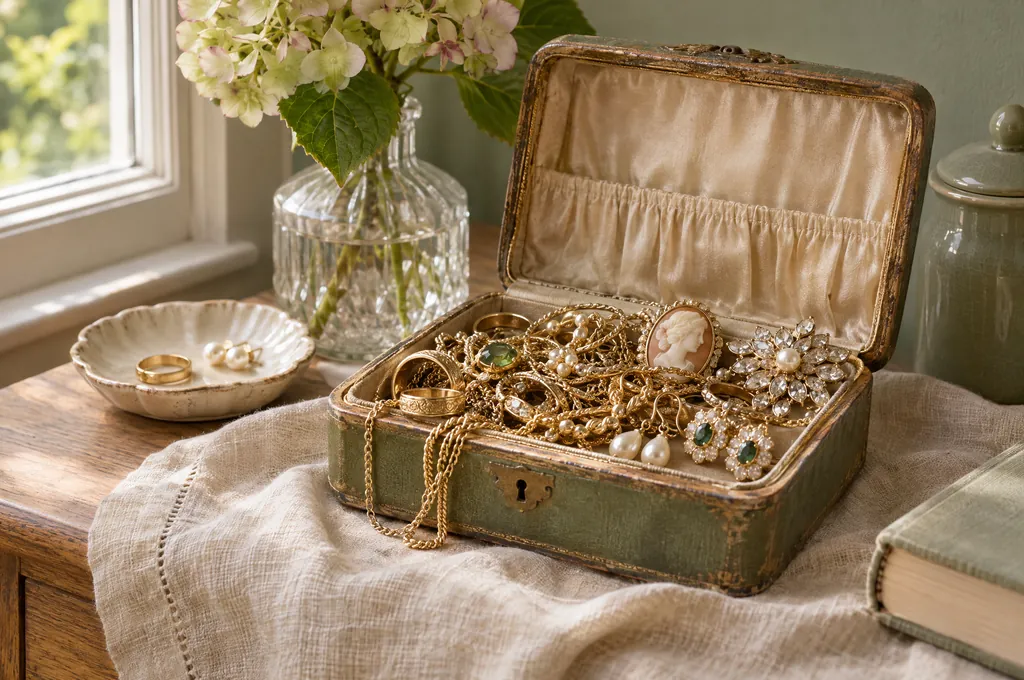
Quick answer: Sort your jewellery into gold, silver, costume and broken pieces, and check for hallmarks. Have anything that might be valuable looked at by a jeweller or auction house before you sell. Gold and silver can be sold for their metal value, good pieces sold at auction or online, wearable costume jewellery donated to charity shops, and broken or odd pieces sent to charity jewellery recycling schemes. A favourite piece can also be remade into something you will wear.
In this article
Most of us have a jewellery box full of things we never wear: gifts that were never quite our style, single earrings, tangled chains, inherited pieces and fashion jewellery from years ago. Some of it may be worth something, some of it could be worn by someone else, and all of it can be dealt with without going in the bin. This guide explains how to sort old jewellery and what to do with each kind.
Start by sorting it
Empty everything onto a clean cloth in good light and untangle chains gently. Then sort into groups:
- Keep and wear. Pieces you love and would wear this month.
- Sentimental. Pieces you do not wear but that matter to you or your family.
- Gold and silver you do not want.
- Costume jewellery in good condition.
- Broken, odd or damaged pieces, such as single earrings and snapped chains.
How to tell what it is made of
Look for a hallmark, a set of tiny stamps usually found inside a ring, on a clasp or on the back of a pendant. UK hallmarks show the metal and its purity, for example 375 for 9 carat gold, 750 for 18 carat gold or 925 for sterling silver. A magnifying glass or your phone's camera zoom helps. Pieces without a hallmark may still be precious metal, especially if they are old or were made abroad, so if you are unsure, ask a jeweller.
Finding out if it is valuable
Before selling anything that might be valuable, get it looked at independently. Jewellers and auction houses can tell you what a piece is and roughly what it is worth. Antique, designer and signed pieces, and those set with real gemstones, can be worth far more than their scrap metal value. In Glasgow, auction houses such as Great Western Auctions and McTear's offer valuations, often from photographs.
If you are clearing a relative's home, keep all jewellery together until the executor has decided what to do with it. Our guide to what not to throw away when clearing a loved one's house explains why.
Selling old jewellery
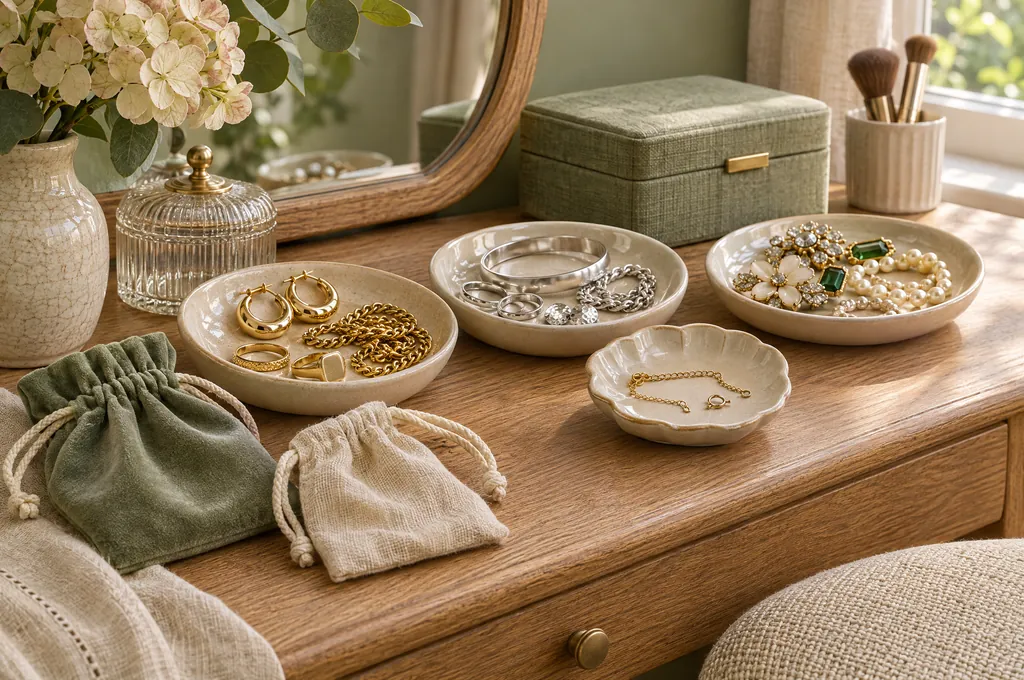
- Scrap gold and silver. Broken or unwanted gold and silver can be sold for its metal value to jewellers and specialist buyers. Get quotes from more than one, check how they test and weigh pieces, and be wary of postal schemes that do not tell you the price up front.
- Auction. Better for antique, designer and good-quality gemstone pieces.
- Online and second-hand jewellers. Good for wearable pieces in popular styles.
Our guide to whether house clearance companies pay you also explains why valuable items are best sold separately rather than as part of a clearance.
Donating jewellery
Charity shops welcome wearable costume jewellery and good-quality pieces, which often sell well. Several charities also accept broken and odd jewellery through recycling schemes. For example, Transform Trade, working with Recycling for Good Causes, accepts any jewellery, including gold, silver, costume jewellery, watches and broken items such as odd earrings, snapped chains and pieces with missing stones, along with old UK and foreign banknotes. The RSPCA and other charities run similar schemes, often with freepost envelopes.
Remaking a favourite piece
If you have inherited jewellery that is not your style but means a lot, a jeweller can remake it into something you will wear. An old ring could become a pendant, stones from several pieces could be reset together, or gold could be melted down and reworked. It keeps the memory and the materials, in a form that suits you.
Storing the jewellery you keep
- Store pieces separately so they do not scratch or tangle, using small pouches or a box with compartments.
- Hang necklaces or fasten them before storing to stop knots.
- Keep silver in an airtight bag to slow tarnishing.
- Keep valuable pieces somewhere secure and make sure they are covered by your home insurance.
Romaine's tip: Take a photograph of each sentimental piece and write down who it belonged to. Families often lose the stories behind jewellery long before the jewellery itself, and a simple note keeps the history with the piece.
Related guides
Jewellery often comes with other inherited belongings. See inherited furniture you do not want, your grandparents' old china and old medals and military memorabilia.
Frequently asked questions
What can I do with broken jewellery?
Sell broken gold and silver for its metal value, or donate it to a charity jewellery recycling scheme, many of which accept broken and odd pieces.
How do I know if my jewellery is real gold?
Look for a hallmark, such as 375 or 750 for gold. If there is no hallmark, ask a jeweller to test it.
Do charity shops take jewellery?
Yes. Wearable costume jewellery and good-quality pieces often sell well in charity shops.
Should I sell inherited jewellery?
Have it valued first, and keep one or two pieces that matter to you. Remaking a piece is another way to keep the memory.